
Green Carnation announce ‘A Dark Poem, Part III: The Messiah Complex’
At no point over the last 25 years has Green Carnation ever shied away from a challenge. Whether completing one of the most ambitious individual epics in metal’s historic archives or performing their acoustic verses under a mountain dam, the prog bards have always flashed a flare for the dramatic. However, from the very beginning, there was one tale – or three, to be exact – that eluded the Norwegians. That is, until now.
Having reached crushing new peaks and delved into their deepest, darkest and most personal depths during the first two parts of A Dark Poem, Green Carnation are bringing their critically-acclaimed album trilogy to a bold conclusion. With the announcement of A Dark Poem, Part III: The Messiah Complex, the band are putting the finishing touches on another masterpiece that stands as one of the defining statements in their storied career.
“A Dark Poem is by far our biggest achievement since Light of Day, Day of Darkness”, Green Carnation vocalist Kjetil Nordhus says. “Our new album trilogy returns to the epic storytelling that put us on the map back in 2001. While the reception to Part I and Part II has been overwhelmingly positive for us, we do believe that Part III saves the best for last. The Messiah Complex ties the whole story together with our most uncompromising statement to date”.
“The intention behind A Dark Poem was to build a completely new musical universe”, Green Carnation bassist and primary lyricist Stein Roger Sordal says. “While the direction revealed itself as the creative journey unfolded, The Messiah Complex was carefully planned with a clear vision for where we wanted the story to end. Our goal was for all three parts to stand on their own, but Part III brings them all together into a unified whole”.
Part I and Part II of A Dark Poem left fans and critics more than satisfied, but Part III arrives as the trilogy’s missing key. On The Shores of Melancholia, Green Carnation unfurled their ode to Arthur Rimbaud’s Ophelia amidst grand and gloomy peaks of crushing heaviness, while Sanguis took a deeply personal turn with the most raw and aching ballads that the band has ever penned. The Messiah Complex ties the whole story together with masterful strokes of prog.
“The first two parts of the trilogy can stand on their own”, Nordhus says, “but in order to truly understand A Dark Poem, you have to hear Part III”.
All the complexities of A Dark Poem won’t be revealed until the 16-minute orchestral suite that closes The Messiah Complex finally sees the light of day. But if the opening of Part III is any indicator, the ending won’t be happy. Lead single “Unconditional Artificial Chemistry” is powered by doomy riffs and a heavy groove. Just don’t get too lost in its pitch-perfect chorus.
“With every byte and code I will comply”, Nordhus sings without missing a beat, though his cold hard stare into the video camera betrays a fatal flaw in the system. “But given time I won’t ask why”.
While inspired by a Shakespearean tragedy, A Dark Poem addresses the rapidly failing relationship between our inner lives and the outside world. “We’ve lost faith in the world we once knew and that’s leading to a personal feeling of dystopia”, Nordhus says. The collective anxiety over encroaching technology, power-hungry leaders and social division that stirred below the surface of Parts I and II surges to a raging head on The Messiah Complex. In the video for “Unconditional Artificial Chemistry”, director Rikard Amodei uses artificial intelligence not as a cheat code but a glitch that exposes its potential to destroy us.
“The video for ‘Unconditional Artificial Chemistry’ tells a meta story about the danger of artificial intelligence”, Nordhus says. “We all know, if we are being honest with ourselves, that A.I. is going to take control of our lives. There are powerful people who stand to profit from it and that makes its takeover inevitable.
“The video shows this happening before our eyes” Nordhus continues. As soon as the A.I. takes control, our likeness is corrupted. Before the song is even finished, we’re completely destroyed”.
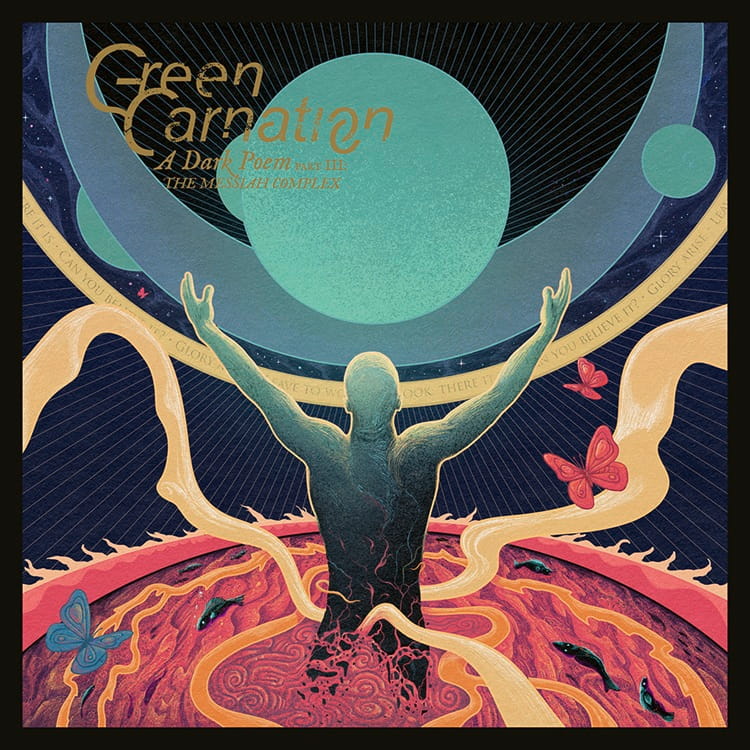
A Dark Poem, Part III: The Messiah Complex comes out September 4, 2026 on Season of Mist.
https://orcd.co/greencarnationadarkpoempart3
Tracklist
1. Unconditional Artificial Chemistry (6:09) [WATCH]
2. The Messiah Complex (6:48)
3. Broken Souls, Common Enemies (8:45)
4. A Dark Poem – Orchestral Suite (16:47)
Full runtime: 38:31
Since their very first journey into the night more than 25 years ago, Green Carnation have never shied away from a challenge. However, from the beginning, there was one tale – or three, to be exact – that eluded them. Until now. After reaching crushing new peaks and delving into the deepest, darkest and most personal depths of their career during its first two parts, the prog bards are bringing their critically-acclaimed album trilogy to a bold conclusion on A Dark Poem, Part III: The Messiah Complex.
Founded in the early ‘90s by Emperor’s original bassist Tchort, Green Carnation amassed a cult following behind critical acclaim for Light of Day, Day of Darkness, an album containing a single hour-long song that still resonates as one of the most ambitious epics in metal’s archives. Current members Bjørn Harstad (guitar) and Endre Kirkesola (keyboard, producer), along with Nordhus and Sordal, were already in place by 2001. But whether it was the gothic crush of A Blessing in Disguise or pitch-black hard rock of The Quiet Offspring, Green Carnation continued branching out through the mid-2000s. Even before going on hiatus in 2007, they still flashed a flare for the dramatic by performing their acoustic verses underneath a mountain dam.
The idea for penning A Dark Poem after Arthur Rimbaud’s dreamy ode to Sheakpeare’s tragic Ophelia steams all the way back to Green Carnation’s earliest reflections of life and death. But when Part I of A Dark Poem was unfurled in 2025, right away, it was clear that the Norwegians had completed their masterpiece. While clouded by a gloomy worldview, The Shores of Melancholia reached newfound peaks of heaviness, swept out to sea by Floydian whirlpools and second wave black metal courtesy of Enslaved vocalist Grutle Kjellson. The album washed onto year-end lists at Loudwire , Angry Metal Guy and other major publications.
If Part I of A Dark Poem set sail from a familiar place of melancholy, then Part II found Green Carnation fighting to stay afloat against the storm raging in their mind’s eye. The heaviness from The Shores of Melancholia continued to age like a fine wine on Sanguis. Over the course of nine minutes, the title track vowed to forgive and forget familial wreckage, only for a traumatic memory to come flooding back during its doomy coda. But the album revealed the band at their most raw and intimate with ballads that unfolded like the grace of a wilted flower. In a rare appearance, Sordal stepped in front of the mic on aching centerpiece “Loneliness Untold, Loneliness Unfold” for the first time since “The Burden Is Mine…Alone”.
While Part I and Part II left fans and critics more than satisfied, Part III arrives as the missing key to A Dark Poem. Whereas The Shores of Melancholia and Sanguis showcased Green Carnation’s command of metal, rock and folk, The Messiah Complex ties together the story of Arthur Rimbaud’s Ophelia with rich strokes of prog. The album’s cup overflows with riffs that evoke King Crimson’s majesty and the ghostly reverence of Opeth with every rhythmic maze-like twist and turn, though don’t get too lost in the pitch-perfect chorus of lead single “Unconditional Artificial Chemistry”.
“The world is moving with such frightening speed. You get the feeling like we’re no longer in control”, Nordhus says. “As individuals, we can’t really cope with everything that’s going horribly wrong”.
The collective anxiety over encroaching technology, power-hungry leaders and social division that stirred below the surface of Part I and Part II surges to a head on The Messiah Complex. “The urge to believe / Must be human”, Nordhus wonders amidst the title track’s endless mysteries. “Whether it’s religion, money or the media, we use things in order to justify our bad habits and get what we want” he grimly surmises. The divide runs so deep that it almost appears impassable on “Broken Souls, Common Enemies” were it not for a guitar solo that is, without a doubt, one of the highest of high points in the trilogy’s arc.
“Originally, that solo was quite different. You can hear our original idea on the bonus LP that comes with the box set for A Dark Poem”, Nordhus teases. “Luckily, we found the perfect place for it to just build and build”.
Of course, no final chapter would be complete without an epic finale. In keeping with the prevailing gloom and doom of Green Carnation’s discography, Part III of A Dark Poem does not end happily. But in classic prog fashion, the closing orchestral suite to The Messiah Complex is the veteran journeyman at their boldest. Over 16 minutes, the band weaves in themes from across the trilogy with returning flautist Ingrid Ose and her colleagues in the Kristiansand Symphony Orchestra and Opera Choir. To the very last dark and doomy note, the results are resounding.
“For quite some time, I have been exploring the idea of setting Arthur Ribaud’s poems to music”, Sordal says. “For A Dark Poem, I chose to use Rimbaud’s interpretation of Ophelia, Shakespeare’s tragic character, as a source of inspiration, rather than directly adapting them – until the title track. Listeners will recognize Ophelia, whether through oneself or our society”.
“Everyone we’ve talked to is surprised by what we chose to do with the orchestra”, Nordhus says. “It’s a bold statement. But from the moment we started our journey into this trilogy, everyone in the band agreed that we were not going to accept any compromises. To end A Dark Poem with an orchestra and all its capabilities is a very proggy thing to do, like the great bands did back in the late ‘60s”.
With A Dark Poem, Part III: The Messiah Complex, Green Carnation finish a masterpiece that stands alongside Light of Day, Day of Darkness as the defining statement of their storied career.
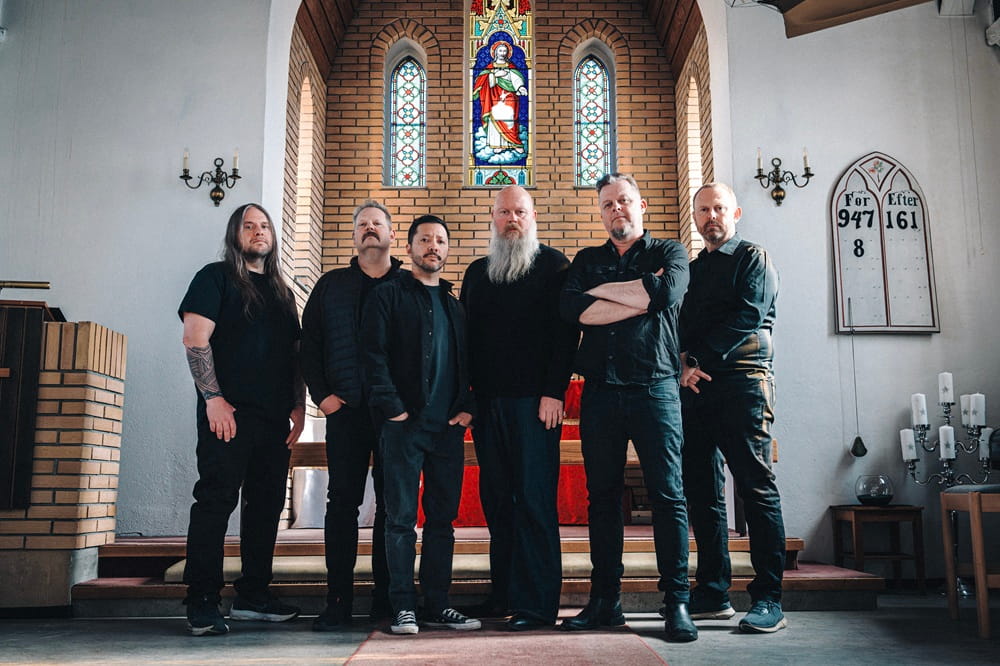
Recording lineup
Kjetil Nordhus – Vocals
Stein Roger Sordal – Bass, Rhythm Guitars, Lead Guitars, Keyboards
Bjørn Harstad – Lead Guitars, Effects
Endre Kirkesola – Keyboards, Synthesizers, Organs, Effects
Jonathan Alejandro Perez – Drums
Guest musicians
Ingrid Ose – Flute on “Broken Souls, Common Enemies”
Kristiansand Symphony Orchestra and Opera Choir on “A Dark Poem – Orchestral Suite”
Live lineup
Kjetil Nordhus – Vocals
Stein Roger Sordal – Bass
Tchort – Guitars
Bjørn Harstad – Guitars
Trond Breen – Guitars
Endre Kirkesola – Keyboards
Links










Leave a Reply
Want to join the discussion?Feel free to contribute!