
1. A Line-Up Built for the Underground Faithful
Steelfest has never chased trends, nor have they ever tried to compete with mainstream metal festivals and the 2026 edition proudly continues that tradition. Instead of safe booking choices, the festival presents a carefully curated gathering spanning raw black metal, death metal brutality, atmospheric darkness and cult legends.
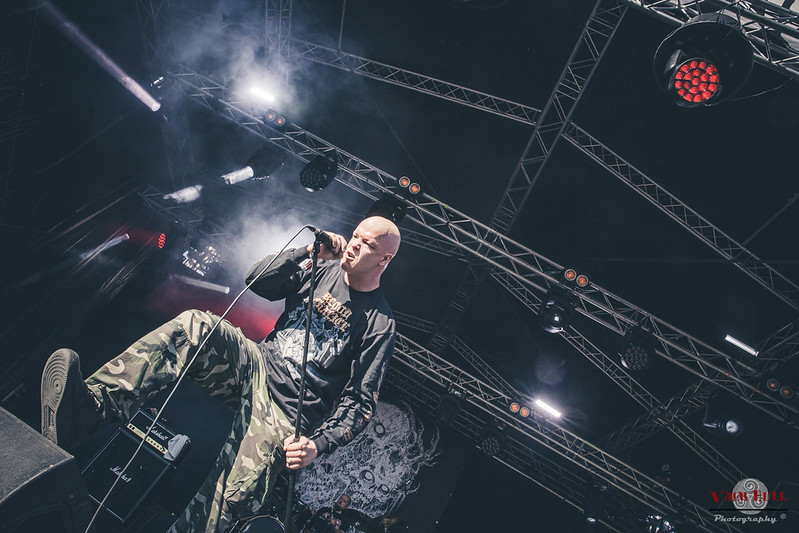
Finnish pioneers Beherit immediately stand out as one of the most essential names on the bill. A rare chance to witness a band whose influence still echoes through generations of extreme metal, whose ritualistic minimalism and brutality helped shape the very DNA of (Finnish) black metal. Alongside them, at this point almost a house band for Steelfest, Satanic Warmaster continues to embody the fiercely independent Finnish tradition, remaining influential decades into its existence and rarely seen outside their country.
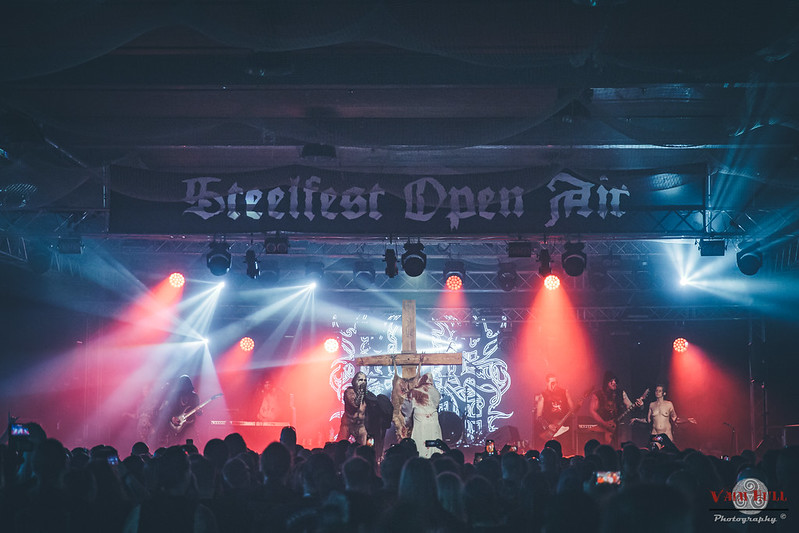
Few bands generate as much anticipation this year as White Death. Known as much for their uncompromising music as for unpredictable and controversial live performances, including past ritualistic stage theatrics that have become part of Steelfest folklore, curiosity around what they will bring to the stage in 2026 is already a major talking point within the scene. The Finnish underground is further reinforced by Warmoon Lord, Chamber Of Unlight, Morgal, and Hiisi, whose appearance is announced as a final return to the stage, performing once at Steelfest 2026 and never again.
Internationally, the festival expands outward with uncompromising forces such as Canadian war metal institution Revenge, orthodox black metal mainstays Inquisition, and Québec’s atmospheric nationalists Forteresse, reinforcing Steelfest’s reputation as a global underground convergence point, while black metal legends Tormentor add historical significance. This is not a line-up assembled for algorithms. It’s one assembled for devotees.
2. Rare and Special Performances You Won’t Easily See Elsewhere
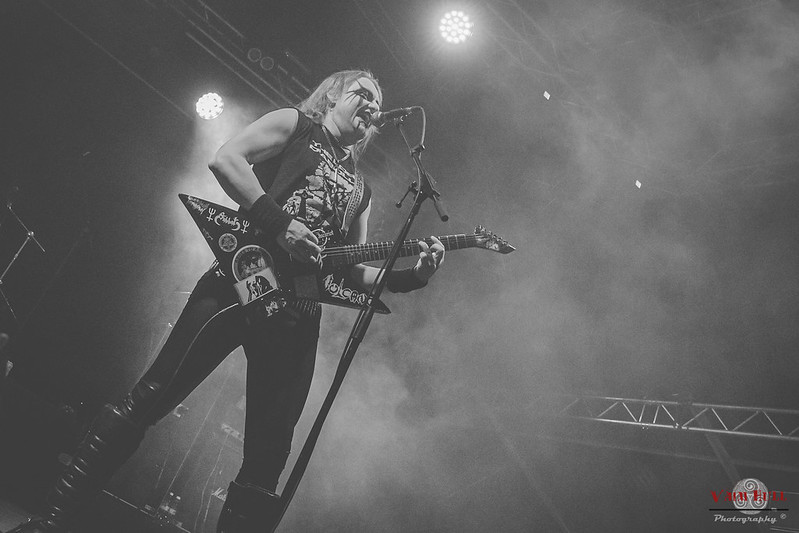
Steelfest XIV leans heavily into exclusivity, offering performances that feel closer to once-in-a-lifetime rituals than regular festival slots. An element of every edition that has become one of its major appealing factors and yet another showcase of how everything operates in close relation with the underground scene. Many artists appearing here rarely tour internationally or perform outside select underground events, or even just go to Steelfest for a 1 time show. Besides the already mentioned Hiisi, who is returning to the stage for 1 last exclusive show, there are plenty of amazing once of a lifetime performances to discover like Norwegian veterans Aeternus arriving with a dedicated ‘Beyond the Wandering Moon’ set, revisiting one of the defining releases of early melodic black metal in a format rarely presented live.
Several artists will step onto a stage for the very first time. Finnish cult entity Famulus Ab Satanas makes its live debut exclusively at Steelfest, while Polish act Bezmir performs its first-ever live show at the festival, just like with the US black metal entity Autumn Strife, delivering their first-ever live appearance and only European show of 2026. Likewise, Finnish supergroup Antihuman Industries, fresh from releasing its debut album, is expected to deliver one of its earliest — if not first — live appearances. Equally unique is Commander Agares, presenting an exclusive album release show, turning the performance into a defining milestone rather than a routine festival set. And knowning from past appearances at Steelfest, every Commander Agares performance is a showcase of trve kvlt black metal including sheep heads thrown in the crowd at their very first show at the fest…
Rarity continues with 2 iconic South American cult acts with the Colombian Erzebet, emerging from the underground of the 90s and whose return to the stage is itself an uncommon occurrence, and Holocausto coming from Brazil forged in the mid-80s, delivering primitive, war-fueled metal with a 40th year anniversary show only at Steelfest and nowhere else in the world, a rare opportunity to witness one of South America’s earliest war-metal influences live!
These are performances built specifically for Steelfest — moments unlikely to be replicated elsewhere.
3. Finnish Darkness at Full Strength — A Global Underground Gathering
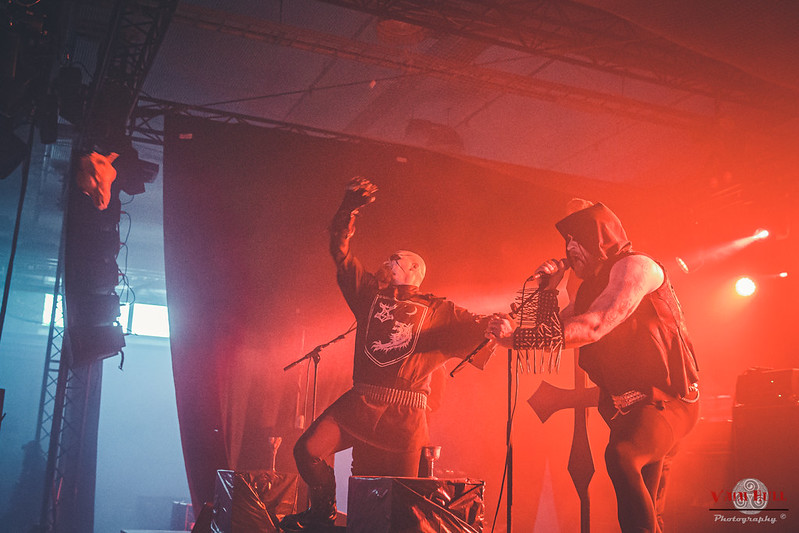
Beyond exclusives, Steelfest succeeds because it presents extreme metal as a living international network rather than isolated local scenes. Of course, the backbone of the fest is the Finnish scene and if you want to understand why Finland remains such fertile ground for extreme music, Steelfest provides the perfect crash course. Beyond the already earlier mentioned legends and new adepts, Finnish brutality is represented by the crushing death metal of Torture Killer, the violent sonic assault of Concrete Winds, and the relentless aggression of Deathchain, while newer underground names like Blood Chalice and Epäkristus highlight the continued evolution of the scene.
And then international highlights further strengthen the experience. Next to the ones we already covered in the earlier points, American nightmare architects Akhlys bring oppressive atmosphere and performances that are unique experiences beyond just another black metal show, Sweden’s Lifelover represents depressive black metal’s cult legacy, and Ukraine’s Severoth delivers immersive atmospheric darkness. Add appearances from projects such as Ifernach, Mavorim, Heinous, FIN, and Thy Antichrist, and the result becomes clear: Steelfest is less a festival and more a yearly summit of the worldwide underground.
And not only the bands come from all over the world to congregate on the unholy festival grounds of Steelfest… people come from all corners every year to celebrate darknes and uncompromising underground extremes. The organization recently shared that tickets have been sold to 49 different countries so far, which makes it the widest reach in the festival’s history.
4. Atmosphere Over Size
In an era where many festivals measure success by growth, bigger crowds, and expanding capacities, Steelfest Open Air deliberately moves in the opposite direction.
The organisers have never hidden that Steelfest is not meant to become a massive mainstream event. Attendance numbers are intentionally kept at a level that preserves intimacy — large enough to create energy and atmosphere, yet small enough that the festival never loses its identity. Even when tickets sell out, which looks increasingly likely again for the 2026 edition, the grounds rarely feel overcrowded.
You can comfortably watch performances without fighting through endless masses, grab a drink without missing half a set while waiting at the bar and find space around food vendors without festival logistics becoming part of the stress. The result is an experience where the focus remains exactly where it should be: the music, the atmosphere and the community surrounding it.
That controlled scale also creates something increasingly rare on the European festival circuit — genuine interaction. Artists, label representatives, photographers and fans move through the same spaces, conversations happen naturally and the boundary between stage and audience feels noticeably smaller than at larger events.
Rather than chasing expansion, Steelfest has chosen sustainability, character and a sense of family or belonging. You’re not watching extreme metal from a distance — you’re immersed in it. And for many visitors, that decision is precisely why they return year after year.
5. A Festival That Refuses to Compromise
Perhaps the most important reason: Steelfest knows exactly what it is. Few festivals in Europe generate as much discussion — or misunderstanding — as Steelfest Open Air.
From its earliest editions, Steelfest has positioned itself around artistic freedom and underground authenticity rather than broad public approval. That philosophy also means the organisers do not curate the line-up according to mainstream expectations or external pressure. Over the years, this has included booking artists connected to controversial scenes or individuals whose imagery, themes or past associations have sparked debate within and outside the metal community.
As a result, Steelfest has occasionally received the negative reputation of being a “nazi festival,” a label that understandably raises questions for potential visitors about whether the event is welcoming or safe. At the same time, reducing Steelfest to that reputation alone does not reflect the full reality experienced on site. From our own visits, the audience has consistently proven far more diverse than outsiders might expect: fans travelling from across the world, representing different nationalities, cultures, beliefs and personal backgrounds. What unites attendees is not political ideology but a shared passion for underground music that rarely finds space at larger or more commercially driven events. The atmosphere across the festival grounds tends to reflect that focus. Conversations revolve around bands, records and discoveries rather than politics; strangers quickly become drinking companions and visitors who might never agree outside the festival environment coexist without friction. For many, Steelfest functions as a temporary space where musical dedication outweighs ideological differences.
That refusal to compromise is ultimately double-edged. It invites criticism and controversy, yet it also preserves something increasingly rare: a festival willing to present the underground in all its complexity instead of reshaping it for comfort or wider acceptance. Whether one agrees with every aspect of that approach or not, Steelfest remains a place where extreme metal culture exists largely on its own terms — unapologetic, challenging, and undeniably authentic.
In an era where many festivals dilute their identity to reach wider audiences, Steelfest doubles down on authenticity — and that consistency is precisely why fans return year after year.
6. More Than a Festival — A Pilgrimage for the Underground
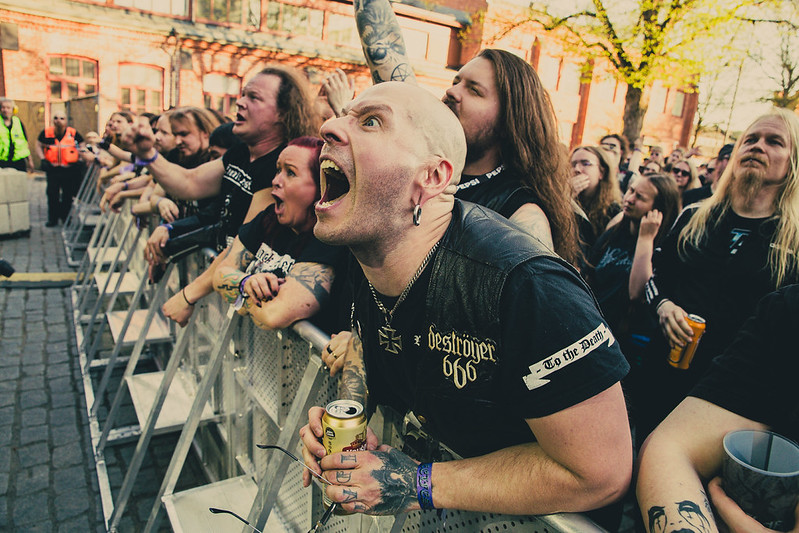
For many attendees, Steelfest Open Air is not simply another summer event on the calendar but a yearly gathering point for a global underground community. Unlike larger festivals driven by touring cycles and commercial visibility, Steelfest operates closer to a meeting of like-minded devotees — artists, collectors, label figures and fans who actively sustain extreme metal culture throughout the year. There are vendors bringing some of the best merch and records to the grounds, including some underground labels, signing sessions often happen, you can get a fresh tattoo while a black metal band is raging on stage in the background or try to get your hands on one of the special Steelfest beers that are available in very limited capacity.
The 2026 edition reinforces that identity stronger than ever through exclusive performances, final appearances, debut shows and carefully curated cult bookings that cannot be replicated elsewhere. People do not travel to Hyvinkää purely for convenience or comfort; they come for atmosphere, authenticity and the shared understanding that this is one of the few remaining festivals where the underground still defines the experience rather than adapts to mainstream expectations.
There is also something uniquely fitting about experiencing extreme metal in Finland itself. Mid-May brings long evenings, cool Nordic air, and a transitional atmosphere between winter and summer — an almost cinematic backdrop for three days of sonic darkness. Combined with Hyvinkää’s accessible location and Finland’s famously welcoming metal culture, the setting becomes part of the experience rather than just a logistical detail.
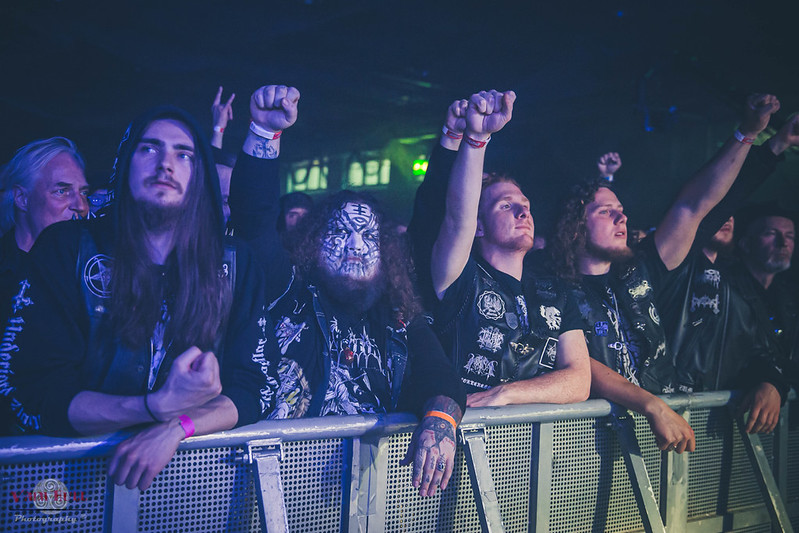
Whether you’re chasing legendary names, searching for new underground discoveries, or simply looking for a festival that still feels genuine, Steelfest Open Air 2026 offers something increasingly rare: a metal gathering built on conviction.
Not the biggest festival.
Not the safest festival.
But for many — exactly the right one.
We’ll see you there! In the mean time, go ahead and put our dedicated Steelfest playlist on and get ready for a good time:




Leave a Reply
Want to join the discussion?Feel free to contribute!