

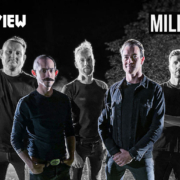
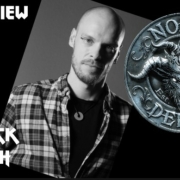
It seems it has started to become a regular thing, meeting up with the always charming frontman of Avatar: Johannes Eckerström. For the third time in about half a year we get to sit down with him for a bit of a chat. Where at our first conversation at Alcatraz 2025 we talked a lot about the then still unnamed upcoming new album, 3 months later we caught up with him again to talk more about ‘Don’t Walk in the Forest’ and their upcoming touring plans. And now Avatar is full-on eating the miles bringing their new show all around the world, where we saw them at their stop in Helsinki and got some time with a seemingly relaxed Johannes in the backstage of Kulttuuritalo right before they would set the venue alight.
When we last spoke with him, it was just before the release of the band’s latest album. At the time, he admits, he was “kind of fried.” Three months later, after a US tour, music videos, Christmas celebrations squeezed in somewhere along the way, and now a return from the Shiprocked cruise, the pace hasn’t exactly slowed — but the perspective has shifted.
“Going on the first tour almost felt like I was going on vacation,” he laughs. Since then, it’s been intense — in a good way. Touring, cruising, creating, living. The Shiprocked experience, in particular, has evolved over the years. The band has figured out how to approach it: bringing partners or family members, booking excursions, kayaking through mangroves in the Bahamas. On stage, the setting forces a different energy. The theatrical machinery is stripped back. “It becomes more of a punk rock show, but on a Caribbean cruise,” he says. “It’s liberating in a way.”
That sense of evolution carries into the live life of the songs. While Avatar’s writing process — recording drums and bass together, always playing as a band — means their material translates naturally to the stage, some surprises still emerge. “Tonight We Must Be Warriors” grew into something more meaningful than he expected. The sincerity of it deepened once it met an audience. Truly living inside a song, he explains, is rare and powerful. Those moments can’t be forced.
Not everything is effortless, though. Some songs are physically harder than anticipated. “Dance Devil Dance” remains vocally brutal due to its phrasing. “That’s no way for a man to sing, but I do,” he jokes. Rather than adjusting arrangements, he prefers to rise to the challenge. Struggle is part of it.
Touring itself has changed more dramatically than the music. Fifteen years ago, life on the road was wilder. Now, it’s about balance. Relationships are more committed. Home life can’t simply be paused. A good tour day might mean exploring a city they’ve played half a dozen times before, finally visiting the Liberty Bell in Philadelphia, or hiking near a venue if nature allows. “It’s a more mature approach,” he reflects. “Richer,” even if that sounds like a boring word.
Despite the planning that goes into an Avatar show, Johannes insists chaos remains essential. A spontaneous moment can become scripted over time, and once a show feels too perfect, the band sometimes deliberately disrupts it. “Then the gremlin comes out and tries to sabotage it.” Mistakes, he notes, can bring audiences closer. In a theatrical setup, precision matters — but he always leaves small pockets that belong entirely to him, moments where he can choose to do something unexpected.
While touring the current album, the songwriter in him is already moving forward. He began writing new material last July. He describes it as wearing different hats: the songwriter hands material over to the performer. But idle hands on tour inevitably start drifting toward new ideas. It’s a parallel existence, a natural creative flow.
As for nerves? There aren’t many left — except when there are. Adding live piano was a significant leap. The first attempt, in Mexico City in front of 8,000 people, nearly unraveled immediately when he realized his microphone wasn’t in place as the click track started. Hands shaking, he butchered the first chorus. “The worst thing that could have happened happened on the first show.” After that, it became fine.
Even subtler adjustments — singing in a lower range, resisting the instinct to attack certain riffs too aggressively — still demand attention. But that’s the craft. That’s growth.
And after decades on the road, forests and circuses behind him, what lingers most is gratitude. “I’m just blown away that people are even interested in what we’re doing,” he says. “The older you get, the more you try to wrap your head around that. It gets weirder every day.”
Weirder — and, clearly, richer.
Links
















Leave a Reply
Want to join the discussion?Feel free to contribute!